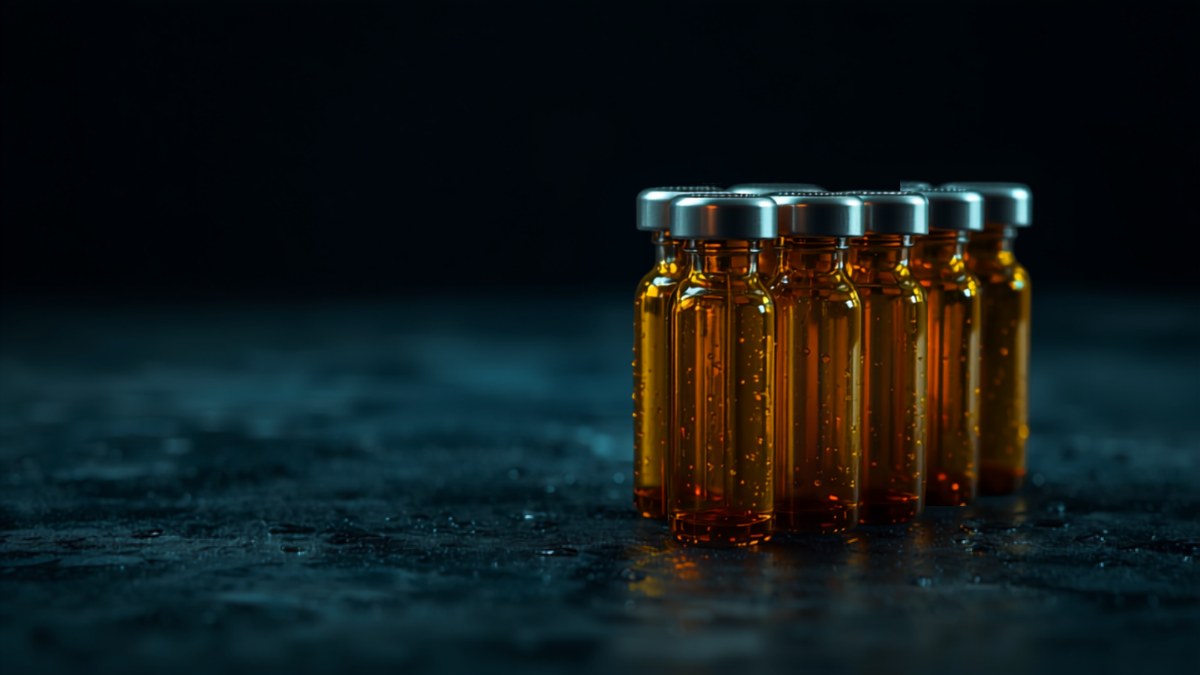
Reconstitution of Research Peptides: Laboratory Handling Best Practices
Reconstitution is a critical step in the preparation of lyophilised research peptides for downstream work. Proper technique affects the integrity of the material, the reproducibility of experiments, and the reliability of any findings that depend on it. This guide covers the practical considerations—from solution selection to sterility and documentation—that support rigorous research peptide handling in the laboratory.
Understanding Lyophilised Peptides and Why Reconstitution Matters
Research peptides are supplied in lyophilised (freeze-dried) form to extend shelf life and reduce storage requirements compared to liquid solutions. Lyophilisation removes water while preserving the peptide backbone, but reconstitution—the reintroduction of solvent—is not a neutral step. The solvent, temperature, pH, and technique all influence whether the reconstituted material behaves as expected in downstream assays.
A peptide that is improperly reconstituted may aggregate, precipitate, or remain only partially dissolved. These outcomes are difficult to detect visually and can silently compromise experimental validity. This is why laboratories investing in research peptides must treat reconstitution as a procedure worthy of the same care applied to the compounds themselves.
Selecting and Preparing Your Reconstitution Solvent
Solvent choice is compound-specific. Many peptides reconstitute well in sterile, distilled water or phosphate-buffered saline (PBS). Others—particularly hydrophobic peptides—may require the addition of organic co-solvents such as dimethyl sulfoxide (DMSO), ethanol, or acetic acid. The supplier's technical datasheet (if available) should specify the recommended solvent; if none is provided, consulting the primary literature on the peptide in question is advisable.
Water quality matters. Use sterile, pyrogen-free water for dilutions. Tap water or non-sterile distilled water introduces variables—ionic strength, microbial load, endotoxin—that can alter peptide behavior and introduce confounds into your work.
pH and buffering. Some peptides are sensitive to acidic or alkaline conditions. If the reconstitution solvent is water alone, the pH may drift; a buffered solution (e.g., PBS at pH 7.4) provides greater stability. Again, the technical guidance for the specific peptide should inform this choice.
The Reconstitution Procedure: Step-by-Step Approach
1. Inspection and labelling
Before opening the vial, verify the label against your order documentation. Check the date received and any expiration or "use-by" date provided by the supplier. Examine the vial for cracks, cloudiness, or signs of moisture (the lyophilised cake should be dry and cake-like, not wet or clumped). Open the vial only when ready to reconstitute.
2. Calculate your target concentration
Determine the final concentration you require for your assays. A common practice is to reconstitute at a higher concentration (e.g., 1 mM) and dilute further as needed, reducing the number of freeze–thaw cycles on the stock solution. Use the peptide's molecular weight (obtained from the vial label or supplier documentation) to calculate the required volume of solvent.
3. Gentle mixing, not vigorous shaking
Add the solvent slowly to the peptide vial. Allow the lyophilised material to dissolve gradually at room temperature or on ice, depending on solubility. Swirl gently; avoid vigorous shaking, which can introduce air bubbles and may promote aggregation in sensitive peptides. Some peptides benefit from brief incubation (15–60 minutes) at 4 °C before use.
4. Assess clarity and homogeneity
Once mixed, the solution should be clear or slightly opalescent, depending on the peptide. A cloudy or precipitate-laden solution suggests incomplete dissolution or aggregation. In such cases, do not proceed to use; instead, consult the supplier or literature for alternative solvent conditions. Document your observation.
5. Aliquot and label
Divide the reconstituted peptide into working aliquots in sterile microtubes. Label each with the peptide name, concentration, date of reconstitution, initials of the person who prepared it, and expiration date. This step is essential for chain of custody and troubleshooting if results later appear inconsistent.
Storage, Stability, and Cold Chain Integrity
Reconstituted peptide solutions are less stable than lyophilised material. Most peptides degrade faster at room temperature and in the presence of light; storage at 4 °C (refrigerator) or –20 °C (freezer) is standard. Some laboratories use –80 °C for long-term storage, which can extend usable life to weeks or months, depending on the peptide.
Freeze–thaw cycles: Each cycle introduces stress on the peptide. Minimize this by storing only small aliquots for immediate use and reserving bulk stock at the lowest feasible temperature. A practical approach is to prepare multiple small aliquots from the initial reconstitution so that a single vial is used in one experiment, rather than repeatedly thawing a single large stock.
Sterility: If reconstitution is performed under non-sterile conditions (laminar flow hood, or aseptic technique), the solution carries a contamination risk. Microbial growth is slow at 4 °C but can accelerate at room temperature. If the solution will be used within 24–48 hours and kept refrigerated, the risk is modest; longer storage or room-temperature holding requires either sterile preparation or acceptance of the contamination risk.
Documentation: Record the storage temperature and date on the label. If your laboratory audit or experiment requires traceability, also log this information in your lab notebook or electronic laboratory notebook (ELN).
Evaluating Supplier Transparency and Accountability
A responsible research peptide supplier should provide:
- A technical datasheet listing the peptide sequence, molecular weight, approximate purity, and recommended reconstitution solvent.
- Guidance on storage conditions (recommended temperature, duration, and expected stability).
- Clear labelling on the vial with the peptide name, lot number, and date of dispatch.
Analytical documentation. Understand that many suppliers hold no analytical documentation—no certificate of analysis (CoA), no third-party testing, no HPLC or mass-spectrometry data. This is a significant gap. A supplier that does not disclose whether analytical data exist, or that does not plainly state they hold none, should raise concerns. If the material is mission-critical to your work, you may choose to commission an independent analytical laboratory to characterise the peptide before use.
Chain of custody. If your work is part of a regulated study or will inform publications, maintaining a documented chain of custody—from receipt through reconstitution, storage, and use—is non-negotiable. The supplier's lot number should be recorded, and all steps should be logged.
Common Pitfalls and How to Avoid Them
- Over-dilution before confirming solubility. Add solvent gradually; once the peptide is fully dissolved, you can always dilute further. If you add too much solvent to an insoluble peptide, you may not be able to recover it.
- Reusing contaminated pipette tips or microtubes. Every transfer is an opportunity for contamination or cross-contamination. Use fresh, sterile tips and vessels.
- Neglecting pH or osmolality. If the peptide will be used in cell assays or in vivo studies (clearly outside the scope of laboratory research), osmolarity and pH become critical. Even for in vitro assays, these parameters can shift results.
- Assuming long-term stability without data. Peptides degrade over time, especially in solution. If you are not provided stability data by the supplier, assume that your reconstituted stock has a practical lifetime of 2–4 weeks at 4 °C unless you have independent evidence otherwise.
Research Context: Peptide Stability in Biological Solutions
A body of research literature has examined the stability of peptides in aqueous and buffered solutions. A 2019 review in Pharmaceutical Research noted that aggregation, oxidation, and proteolytic cleavage are common failure modes in peptide solutions stored at room temperature or in the presence of oxygen. Researchers observed that peptide half-life in PBS at 37 °C ranged from hours to days depending on sequence and environmental factors. Storage at 4 °C or below significantly slowed degradation in model peptides, although some sequences remained susceptible to aggregation even under cold conditions.
A 2021 study in International Journal of Pharmaceutics reported that the choice of reconstitution solvent—particularly the inclusion of surfactants or cryoprotectants—markedly influenced the stability of hydrophobic peptides over a 4-week period. The researchers found that peptides reconstituted in PBS alone showed greater aggregation than those prepared in solvent systems supplemented with polysorbate 80 or ethylene glycol.
Reader note: These findings are preliminary and based on in vitro models. Stability profiles are peptide-specific and may not apply to your compound of interest. Consult the primary literature for your specific sequence and always verify stability in your own laboratory before relying on extended storage.
Conclusion
Reconstitution of research peptides is a foundational step that connects the supplier's product to your experimental pipeline. Attention to solvent selection, careful mixing, proper aliquoting, and meticulous labelling establish a platform for reproducible, traceable work. A transparent supplier will provide technical guidance and clear documentation of lot identity and dispatch date; gaps in this information are legitimate grounds for inquiry or reconsideration.
Your laboratory's protocols for reconstitution, storage, and chain of custody are as much a part of research integrity as the analytical methods that follow. Treat them accordingly.
Disclaimer
This post is educational and describes general laboratory handling practices for research compounds. It is not medical, veterinary, or regulatory advice. All materials discussed are for research use only and not intended for human or animal consumption. The information does not constitute endorsement of any product or supplier. Always consult the supplier's technical datasheet, relevant safety data sheets (SDS), and primary literature before working with any research compound. Your laboratory's standard operating procedures and institutional guidelines take precedence.