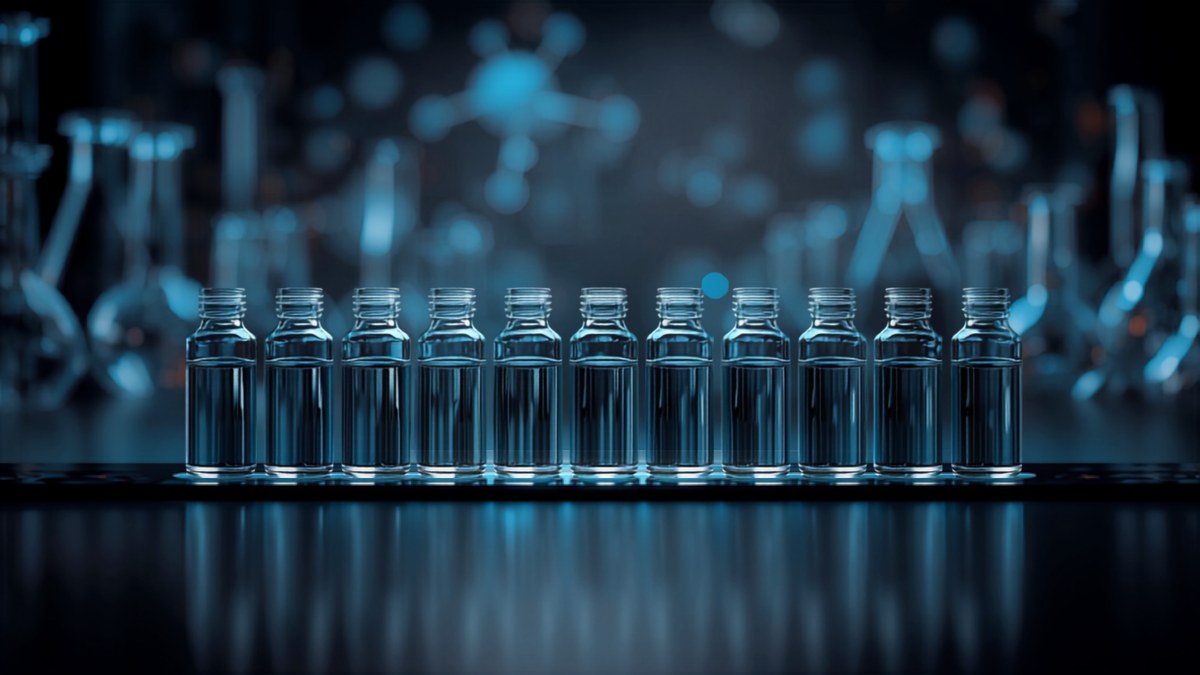
Bacteriostatic Water for Canada Research: Laboratory Handling, Storage, and Reconstitution Practice
Bacteriostatic water is a foundational solvent in research laboratories across Canada, particularly for reconstituting lyophilised peptides and research compounds. Understanding how to source, store, and handle this material—and what to expect from a reliable supplier—is essential for maintaining experimental integrity and chain of custody. This guide explores the practical considerations researchers should evaluate when selecting bacteriostatic water and implementing it in bench workflows.
What Bacteriostatic Water Is and Why Laboratories Use It
Bacteriostatic water is sterile, depyrogenated water to which a bacteriostatic agent (typically benzyl alcohol at 0.9% w/v) has been added. The bacteriostatic component inhibits the growth of most vegetative bacteria and fungi, extending the usable window of multi-dose vials or reconstituted preparations once they have been opened in a laboratory environment.
For research purposes, bacteriostatic water is widely used to reconstitute lyophilised peptides and other research compounds. Unlike sterile water for injection (which lacks a bacteriostatic agent), bacteriostatic water is formulated to reduce microbial proliferation in vials that will be accessed repeatedly over days or weeks—a common scenario in research laboratories. This makes it particularly valuable for experiments requiring serial sampling or staged reconstitution of multiple aliquots.
Researchers should note that the presence of a bacteriostatic agent can influence certain downstream applications. For protocols in which any additive would interfere with detection, quantification, or downstream use, sterile water without a bacteriostatic component may be appropriate instead. Evaluating your specific protocol requirements before ordering is a practical first step.
Sourcing Bacteriostatic Water: What to Ask Your Supplier
When evaluating a bacteriostatic water supplier operating in the Canada research market, several practical questions will help you assess reliability and fit:
Sterilisation and depyrogenation method: Ask your supplier how the water is sterilised (typically membrane filtration or autoclaving) and depyrogenated (usually by filtration or dry heat). Reputable suppliers document their methods clearly. We hold no analytical documentation—no certificates of analysis, HPLC verification, or purity testing—and material should be treated as uncharacterised. This is standard for research-use products; your own laboratory may wish to validate the water by appropriate methods before use.
Packaging and vial integrity: Bacteriostatic water should arrive in sealed, sterile vials with intact tamper seals. Inspect vials on receipt for cracks, cloudiness, or discolouration. Document the lot number and date on the packaging for chain-of-custody records.
Container material and compatibility: Most bacteriostatic water is supplied in glass vials; some suppliers offer plastic alternatives. Glass is chemically inert and suitable for long-term storage; plastic may leach compounds over time or absorb certain additives. Confirm the vial material with your supplier if your protocol requires specific compatibility.
Shelf life and storage conditions: Ask for the manufacturer's stated shelf life (typically 24–36 months when stored unopened at controlled room temperature). This information should be printed on the label or packaging insert.
Delivery window: Orders ship directly from our manufacturing partner. Standard delivery windows are 10–15 days.
Storage, Cold Chain, and Stability
Bacteriostatic water must be stored at controlled room temperature, typically between 15–25 °C, and protected from direct sunlight and heat sources. Extreme temperatures can compromise the sterility and depyrogenation of the product.
Unopened vials: Keep sealed vials in a cool, dry location away from vibration and light. Properly stored unopened vials remain usable for the stated shelf life. Rotate stock using a "first in, first out" system to minimise age-related degradation.
Opened vials: Once a vial has been opened (needle punctured or cap removed), the bacteriostatic agent will begin to be depleted with each withdrawal. Research practice suggests that multi-dose vials should not be accessed beyond a reasonable timeframe (often 7–14 days after opening, though this varies by protocol and laboratory policy). Document the opening date clearly on the vial label. If the vial is stored at room temperature and remains sealed except for needle access, the bacteriostatic action generally persists throughout the manufacturer's shelf-life period, assuming proper aseptic technique is used with each withdrawal.
Preparation for use: Before opening a vial, inspect it visually. The solution should be clear and colourless. If any cloudiness, particles, or discolouration are present, do not use the vial; discard it and document the observation for your records.
Reconstitution Practice and Aseptic Technique
When using bacteriostatic water to reconstitute a lyophilised peptide or research compound, aseptic technique is critical. Even the bacteriostatic agent cannot prevent contamination if non-sterile technique is used.
Basic workflow:
1. Assemble all materials in a clean workspace, ideally a biosafety cabinet or laminar flow hood if available.
2. Disinfect the rubber septum of both the bacteriostatic water vial and the lyophilised compound vial with 70% isopropyl alcohol and allow to air dry.
3. Draw bacteriostatic water into a sterile syringe using a sterile needle.
4. Inject the water slowly into the lyophilised compound vial, aiming the stream against the vial wall rather than directly onto the cake to minimise foaming and aeration.
5. Allow the compound to dissolve completely before withdrawing the reconstituted solution. This may take several minutes.
6. If the reconstituted solution will be stored for extended periods, label the vial with the compound name, concentration, reconstitution date, and your initials.
Common pitfalls:
- Using non-sterile syringes or needles, which introduces bacteria or fungi directly into the vial.
- Injecting water too forcefully, which creates foam and can trap air, accelerating oxidation.
- Reusing needles between vials, which risks cross-contamination.
- Failing to allow proper air equilibration, which can create pressure differences and lead to leakage when stored upright.
Labelling and Chain of Custody
Proper labelling ensures traceability and reproducibility. At minimum, record:
- Product name (bacteriostatic water)
- Lot number (from the supplier's packaging)
- Date received
- Expiry date (calculated from shelf life)
- Date opened (if applicable)
- Storage location and conditions
- Initials of the person receiving and opening the vial
Chain-of-custody documentation is particularly important if your research involves regulatory oversight, institutional audit, or collaborative studies. Maintain these records for the duration of the study and according to your institution's document retention policy.
If bacteriostatic water is used to reconstitute a research compound, also document:
- The identity of the lyophilised compound
- The volume of bacteriostatic water added
- The resulting concentration of the reconstituted solution
- The date and time of reconstitution
- Any observations (colour, clarity, odour, dissolution time)
Practical Considerations for Multi-Site and Collaborative Research
Researchers working across multiple Canadian laboratories or collaborating with international institutions should confirm that all sites are using the same bacteriostatic water supplier and lot number, if reproducibility is critical. Subtle variations between suppliers (e.g., slight pH differences, trace impurities) typically do not affect research outcome, but documenting the source ensures that any future discrepancies can be traced.
If material will be transported between sites, ensure it remains at controlled room temperature and is protected from temperature extremes during transit. Many Canadian research couriers can provide temperature-monitored shipping; it is worth requesting this service to maintain chain of custody.
Disclaimer
This article is for educational purposes and is intended to support laboratory best practices in handling bacteriostatic water for research use only. It is not medical advice. Always consult the supplier's product documentation, your institution's standard operating procedures, and relevant primary literature before implementing any protocol. Research compounds are for laboratory investigation only and must not be used in any human or animal application.