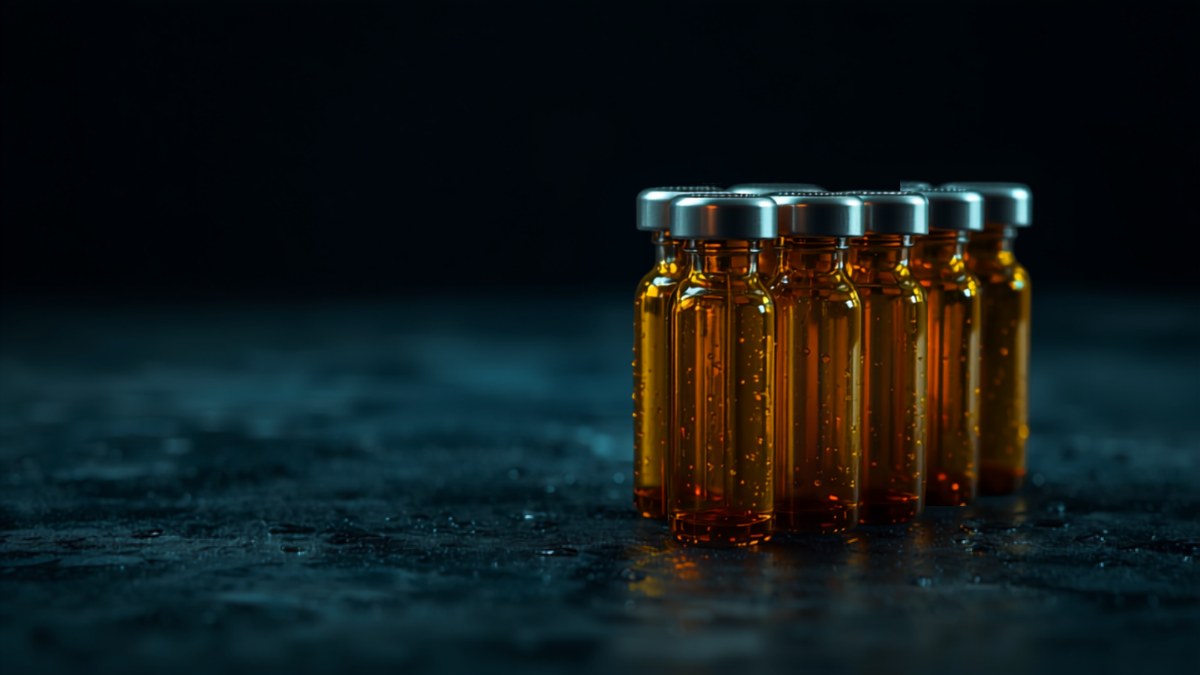
Compounding Grade Research Peptides: Handling, Storage, and Bench Practice for Laboratory Professionals
When laboratory professionals source compounding grade research peptides, the focus shifts from supplier marketing to practical reality: how the material arrives, how to work with it safely, and how to maintain its integrity through to the end of your research cycle. This post addresses the operational and technical considerations that define success with lyophilised peptide material in a research laboratory.
What "Compounding Grade" Actually Means in a Research Context
The term "compounding grade" in the research peptide world does not denote a regulatory registration or formal certification. Rather, it describes a material intended for formulation, dilution, or further processing in a laboratory setting—as distinct from, for example, reference standards or pre-formulated products.
A compounding grade peptide arrives as a lyophilised (freeze-dried) powder. This physical form is chosen because peptides are inherently fragile molecules; lyophilisation removes water, reducing degradation pathways and extending shelf life compared to liquid solutions. However, the term "compounding grade" is primarily a description of intended use—not a guarantee of purity, potency, or analytical documentation.
When evaluating a supplier for compounding grade research peptides, understand that this designation reflects how the material will be used in your lab, not what certifications it carries. We hold no analytical testing documentation, third-party verification, or certificates of analysis. Material should be treated as uncharacterised until your own laboratory characterises it through your own testing procedures.
Reconstitution: Starting from Lyophilised Powder
Reconstitution is your first hands-on step and sets the tone for downstream reliability.
Preparation and workspace: Work in a clean, dedicated area. Lyophilised peptides are hygroscopic—they absorb moisture from air. Have your solvent, pipettes, vials, and measuring equipment ready before opening the original container. Minimise the time the powder is exposed to ambient air.
Solvent selection: Most research-grade peptides reconstitute in sterile water for injection (WFI), phosphate-buffered saline (PBS), or other aqueous buffers. Organic solvents (DMSO, ethanol) are sometimes required for poorly soluble peptides. Check the product information sheet provided with your order for solvent recommendations specific to your peptide. The choice affects both dissolution speed and solution stability.
Dissolution technique: Avoid vigorous shaking. Instead, allow the powder time to hydrate passively, then use gentle pipette mixing or a low-speed vortex. Vigorous agitation introduces air, promotes foaming, and can introduce mechanical stress to the dissolved peptide. Some peptides may take 15–30 minutes to fully dissolve; patience during this step supports consistent results.
Concentration calculation: Weigh the vial before and after opening to confirm the stated mass. Reconstitute to your target working concentration using volumetric pipetting. Document the mass, solvent volume, and resulting concentration in your lab notebook. This record becomes part of your chain of custody.
Storage and Cold-Chain Integrity
Peptides degrade through multiple pathways: hydrolysis, oxidation, photodegradation, and microbial contamination. Cold storage slows but does not stop these processes.
Lyophilised powder storage: Unopened vials should be stored at 2–8 °C (refrigerator temperature) or, if longer-term stability is required, at −20 °C (freezer). Protect from light by keeping vials in opaque containers. Desiccant packets or vacuum-sealed packaging in the original shipment help exclude moisture. Once a vial is opened, reseal it promptly and return it to cold storage. Each freeze–thaw cycle introduces moisture and risks material degradation; minimise these events by aliquoting powder into smaller working portions before first use if you plan repeated access.
Reconstituted solution storage: A dissolved peptide is significantly more vulnerable than the lyophilised powder. Store reconstituted solutions at 2–8 °C for short-term use (typically days to a few weeks, depending on the peptide and solvent). For longer storage, −20 °C is preferred. If sterile technique was not used during reconstitution, microbial growth becomes a risk within days at refrigeration temperature. Consider adding a preservative (e.g., sodium azide, benzyl alcohol) if the solution will be stored beyond one week and accessed multiple times. Document the reconstitution date and any additives on the vial label.
Cold-chain documentation: Record the temperature at which material arrived and the conditions under which you stored it. Thermal data loggers can provide objective evidence of temperature maintenance during receipt and early storage. This record is essential for troubleshooting if results become inconsistent.
Labelling, Chain of Custody, and Traceability
Professional laboratory work demands clear identification and documented accountability for every material that enters and moves through your space.
Label requirements: Each vial—whether original, reconstituted, or aliquoted—should bear:
- The peptide name or identifier (sequence or manufacturer code)
- The mass (if lyophilised) or concentration (if reconstituted)
- The solvent used and any additives
- The date of reconstitution or aliquoting
- The name or initials of the person who prepared it
- The intended storage temperature
- An expiration or "use by" date (typically 6–12 months for frozen lyophilised material, shorter for solutions)
Chain of custody: Document who prepared the material, when, and where it was stored. If multiple researchers access the same aliquot, record each opening and the date. If material is transferred to another lab or researcher, include a transfer log with signatures or electronic acknowledgment. This creates an auditable trail and helps isolate sources of contamination or degradation if problems arise.
Inventory and disposal: Maintain a simple spreadsheet or lab management system logging all peptide vials received, their storage location, and their status (in use, depleted, disposed). Before disposal, confirm that any hazardous additives (e.g., sodium azide) are handled according to your institution's chemical waste protocols.
Understanding Analytical Testing and Your Role as End-User
Compounding grade research peptides supplied by our partner arrive without analytical documentation.
However, we hold no such documentation, and material should be treated as uncharacterised.
Your responsibility as the end-user: If your research protocol requires confirmation of peptide identity, purity, or other properties, you must arrange for your own analytical testing through your institution's analytical laboratory or an external testing service. This is standard practice in research and ensures that characterisation aligns with your specific experimental requirements. Your choice of testing method, acceptance criteria, and interpretation of results remain entirely under your control.
Practical Bench Considerations and Stability Expectations
Peptides are not inert. Real-world stability depends on the specific peptide (sequence, charge, hydrophobicity), the storage environment, and how frequently the material is accessed.
Expected timeline for use: A properly lyophilised and stored peptide may remain suitable for research use for several months if stored at −20 °C and protected from light. Refrigerated (2–8 °C) lyophilised material typically has a shorter useful window, particularly if the vial is opened repeatedly. Reconstituted solutions degrade faster—expect weeks to a few months at 2–8 °C depending on the peptide.
Observable changes over time: As a peptide solution ages, you may observe discoloration (yellowing, browning), precipitation, or a change in apparent viscosity. These are visual indicators of chemical change. Even if no visible change occurs, peptide properties may shift. Serial measurements or assays in your own research (if your protocol includes them) will reveal trends.
Best practices for consistent results:
- Minimise freeze–thaw cycles by preparing aliquots.
- Store at the lowest practical temperature (−20 °C or colder is preferable to 2–8 °C).
- Protect from light using amber vials or opaque wrapping.
- Use sterile technique if reconstituted solutions will be stored longer than a few days.
- Document all storage conditions and access dates in your lab notebook.
Compliance and Responsible Sourcing
As a researcher working with compounding grade research peptides, your role includes verifying that the supplier can deliver material suitable for your intended work, that your institution's protocols are followed, and that you maintain full documentation of receipt, storage, and use.
A responsible supplier will:
- Clearly state that material is for research use only.
- Provide a product information sheet with basic handling guidance.
- Deliver material within the stated window (10–15 days from order).
- Confirm that orders ship directly from the manufacturing partner.
A responsible researcher will:
- Understand that we hold no analytical documentation and treat material as uncharacterised.
- Conduct your own due diligence on peptide suitability for your protocol.
- Maintain clear records of receipt, storage, and use.
- Arrange your own analytical testing if your research requires confirmation of identity or properties.
Closing Thoughts
Compounding grade research peptides are powerful tools for laboratory science, but their value depends entirely on how they are handled from receipt through use. Attention to reconstitution technique, cold-chain integrity, labelling, and documentation transforms lyophilised powder into reliable, traceable research material. By focusing on these practical fundamentals, you ensure that your results reflect the biology you are studying, not artefacts of poor handling or lost accountability for your materials.
Disclaimer: This post is educational and addresses laboratory handling practices only. It is not medical, therapeutic, diagnostic, or veterinary advice, and makes no health claims. Compounding grade research peptides are intended for laboratory research use only. We hold no analytical documentation, certificates of analysis, or third-party testing results. Material should be treated as uncharacterised. Always consult the product information sheet provided with your order and follow your institution's protocols for chemical handling, storage, and disposal. Consult the primary scientific literature and your institutional safety officer for guidance on your specific research requirements.