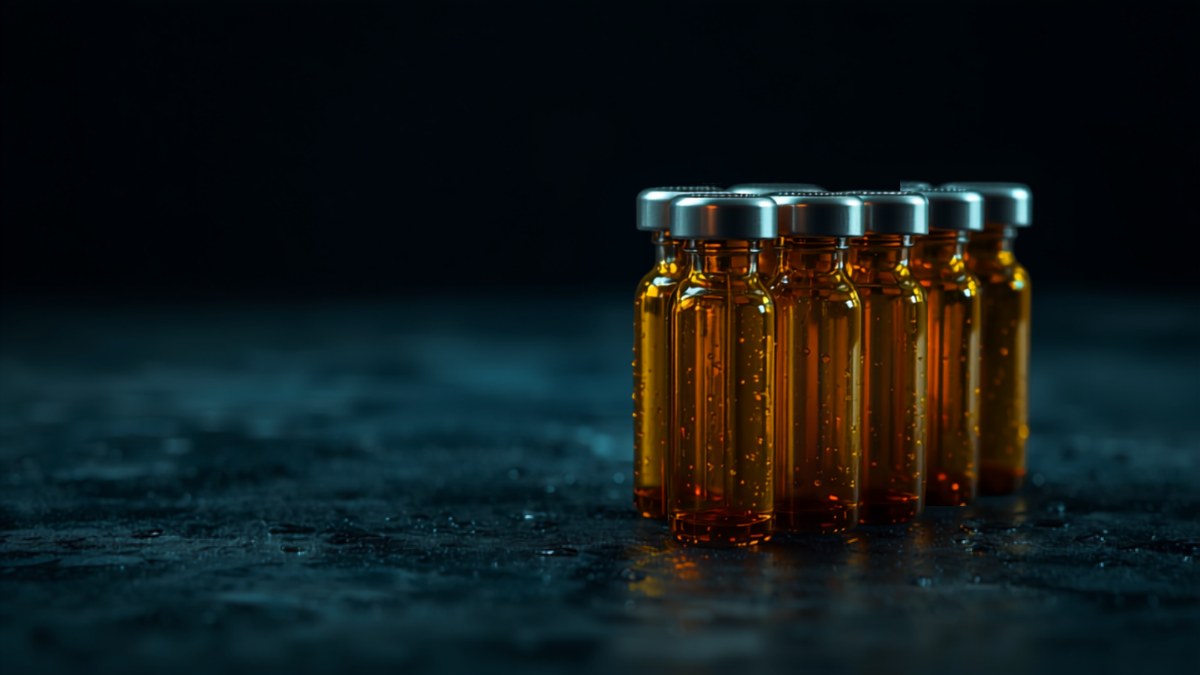
Compounding Grade Research Peptides: Handling, Storage, and Laboratory Best Practice
When a laboratory sources compounding grade research peptides, the quality of the material depends as much on proper handling after receipt as it does on the original synthesis. This guide covers the practical considerations—from reconstitution and storage through chain of custody—that researchers and facility managers should understand when working with lyophilised peptide preparations intended for research applications.
What "Compounding Grade" Means in the Research Context
"Compounding grade" traditionally refers to materials suitable for formulation into preparations, as distinct from analytical standards or research-only substances. In the research peptide market, the term signals that material is supplied for laboratory use and formulation work, not for human or animal use.
When evaluating any supplier's offering, understand what you are actually receiving: a lyophilised powder of stated molecular composition. Critical point: no analytical documentation accompanies our material. We hold no analytical data, no certificates of analysis, and no testing records. You should treat incoming peptide powder as uncharacterised until your own laboratory or a contracted testing service has performed the characterisation work you require. This distinction matters. A researcher who assumes composition without independent verification risks invalidating months of experimental work.
Receiving, Labelling, and Chain of Custody
Documentation at Receipt
When your order arrives, inspect the shipment immediately:
- Labeling: Research peptides should arrive with clear identification—molecular name, sequence (if applicable), lot number or batch identifier, and date of synthesis or packaging.
- Physical condition: The container should be intact and show no signs of moisture ingress, temperature excursion, or damage.
- Chain of custody: Document receipt—who signed for it, the date, and initial visual inspection results—in your laboratory information management system (LIMS) or paper records. This is non-negotiable for any subsequent experimental work.
Do not assume the label is complete or accurate. Cross-reference the order confirmation with the physical label. Discrepancies should be resolved with the supplier before the material enters active use.
Storage Conditions Before First Use
Upon receipt, place lyophilised peptide in a freezer environment appropriate to peptide stability:
- Temperature range: −20 °C is standard; −80 °C is preferred for long-term storage if the peptide is known to be temperature-sensitive.
- Moisture control: Keep the vial sealed until you are ready to reconstitute. Peptides are hygroscopic; exposure to ambient humidity will degrade them over time.
- Light protection: Store in opaque or amber containers if the peptide is photolabile (aromatic residues can be sensitive to UV).
Label the storage location clearly in your freezer inventory.
Reconstitution: Practical Procedure and Solvent Choice
Preliminary Steps
Before opening a lyophilised peptide vial:
1. Plan your experiment. Know your target concentration, the volume you need, and the assay or application you will use the reconstituted material for. Hasty reconstitution often leads to waste.
2. Inspect the powder. A lyophilised peptide should be a white or off-white solid, uniformly packed. Discoloration, clumping, or signs of moisture suggest prior exposure to heat or humidity—document this and consider testing a small aliquot before committing the entire batch to an important experiment.
3. Assemble your workspace. Work in a clean area, ideally a fume hood if the reconstitution solvent is volatile or if you are concerned about airborne contamination. Have sterile pipettes, appropriate volumetric glassware, and your chosen solvent ready.
Solvent Selection
The solvent you choose affects peptide stability and behaviour:
- Ultrapure water (Milli-Q or equivalent): Suitable for many peptides; verify that the sequence does not contain hydrophobic clusters that might cause aggregation or precipitation.
- Dilute aqueous acid (0.1% TFA or acetic acid): Common for peptides prone to aggregation; the acid suppresses ionic interactions and keeps the peptide soluble. TFA (trifluoroacetic acid) is widely used in peptide chemistry but is corrosive and requires careful handling.
- Phosphate-buffered saline (PBS) or other physiological buffer: Appropriate if your downstream application requires the peptide in a buffered state. Check pH stability of the peptide across your intended pH range.
- DMSO or other organic solvents: Reserved for highly hydrophobic peptides or specific applications; document organic solvent use for regulatory and safety reasons.
Whatever solvent you select, use the highest purity grade available. Contaminants in the solvent will contaminate your peptide solution.
Reconstitution Steps
1. Calculate the volume. If you have received 5 mg of a peptide with a molecular weight of 1500 Da and you need a 1 mM stock:
- Moles of peptide = 5 mg ÷ 1500 = 0.00333 mmol
- Volume for 1 mM = 0.00333 mmol ÷ 0.001 mmol/mL = 3.3 mL
2. Add solvent incrementally. Do not dump all the solvent into the vial at once. Add half the target volume, let it stand for 2–5 minutes to allow the powder to begin dissolving, then add the remainder.
3. Vortex gently. Mix the solution; avoid vigorous agitation that creates bubbles and denatures peptides.
4. Verify dissolution. The solution should be clear or slightly turbid (depending on the peptide hydrophobicity). If undissolved powder remains after 10 minutes, the peptide may be incompatible with your chosen solvent, or you may need to adjust pH, temperature, or brief sonication time in a water bath.
5. Measure the final volume. Use a volumetric flask to ensure accurate concentration. Transfer the reconstituted peptide to the flask, rinse the original vial with a small volume of solvent, and transfer the rinse. Make up to the mark.
Storage of Reconstituted Solutions and Stability
Immediate Considerations
A reconstituted peptide solution can be subject to several degradation pathways:
- Oxidation (particularly of methionine and cysteine residues)
- Hydrolysis (peptide bond cleavage, accelerated at extremes of pH and at room temperature)
- Microbial contamination (if the solution is aqueous and not sterile-filtered)
- Aggregation (peptide-peptide association, especially at high concentration or if the peptide is hydrophobic)
Storage Protocol
- Concentration: If you have prepared a high concentration (e.g., 10 mM), divide it into small aliquots (50–200 µL) in sterile, RNase-free microtubes. This minimises exposure to oxygen and repeated freeze–thaw cycles.
- Temperature: Store at −20 °C for short-term use (weeks to a few months) or −80 °C for long-term storage (months to a year or more).
- Headspace: If storing in a tube, minimize air in the tube by filling it nearly to the cap, or overlay with inert gas (nitrogen or argon) before sealing. Dissolved oxygen promotes oxidation.
- Light: Keep in the dark or in opaque tubes if the peptide contains aromatic residues (tryptophan, phenylalanine, tyrosine).
- pH: If the solution is in a buffer, verify that the pH does not drift over time (some buffers lose capacity).
Labelling and Chain of Custody for Solutions
Every aliquot must be clearly labelled with:
- Peptide name and sequence
- Concentration (e.g., 5 mM in 0.1% TFA)
- Date of reconstitution
- Solvent used
- Your initials or identifier
- Expiration date (a conservative estimate; many labs use 3–6 months for frozen solutions in the absence of stability data)
Record the location of each aliquot in your freezer. When you use an aliquot, note the date, time, and application in your LIMS or experiment log.
Monitoring Reconstituted Peptide Integrity During Storage and Use
Because analytical documentation is not provided with our material, many laboratories monitor their reconstituted peptides through practical means to assess quality during storage and use.
Practical Integrity Assessment
- Visual inspection: On each use, check the solution for cloudiness, colour change, or precipitation. Document any anomalies in your records.
- Behaviour in your assay: If your application is sensitive (e.g., binding assays, enzyme activity), run a positive control with freshly reconstituted material periodically and compare it to older aliquots. A decline in activity or binding over time suggests possible changes in the peptide over storage.
- Analytical testing (if available in-house or via a service provider): If your laboratory has access to analytical instrumentation or contracts with an external service, you may analyse an aliquot of your solution at time zero and after storage to assess composition and detect potential changes.
When to Discard and Reconstitute Fresh
If a stored solution shows signs of compromise—cloudiness, unexpected colour, loss of activity in your assay, or visual confirmation of contamination—discard it and reconstitute a fresh aliquot from the original lyophilised powder. Attempting to salvage a compromised solution wastes time and invalidates results.
Supplier Evaluation: What Questions to Ask
When selecting a source for compounding grade research peptides, ask:
1. What information is provided with the peptide? (Identity, lot number, synthesis date, expected molecular weight.)
2. Does the supplier provide analytical documentation? (Most research peptide suppliers do not; a certificate of analysis is not a standard feature of research-grade material.)
3. What is the estimated composition, and on what basis? (Some suppliers may provide an estimate based on synthesis yield; others will not. You should obtain independent analytical characterisation through your own laboratory or a contracted testing service if composition confirmation is critical to your work.)
4. What storage conditions does the supplier recommend? (This reflects the peptide's known stability profile and is useful information.)
5. What is the delivery timeline? (Orders typically ship 10–15 days after confirmation.)
Do not expect certifications such as GMP, ISO, or USP registration from a research peptide supplier. These certifications are designed for pharmaceutical manufacturing and are not relevant to research use. A supplier is not deficient for lacking them; their absence is normal for research-grade material.
For research use only. Not for human or veterinary use. This content is informational and describes laboratory research handling practices—it is not medical advice, and makes no therapeutic, diagnostic, or health claims. Always consult the primary literature and perform your own independent testing.