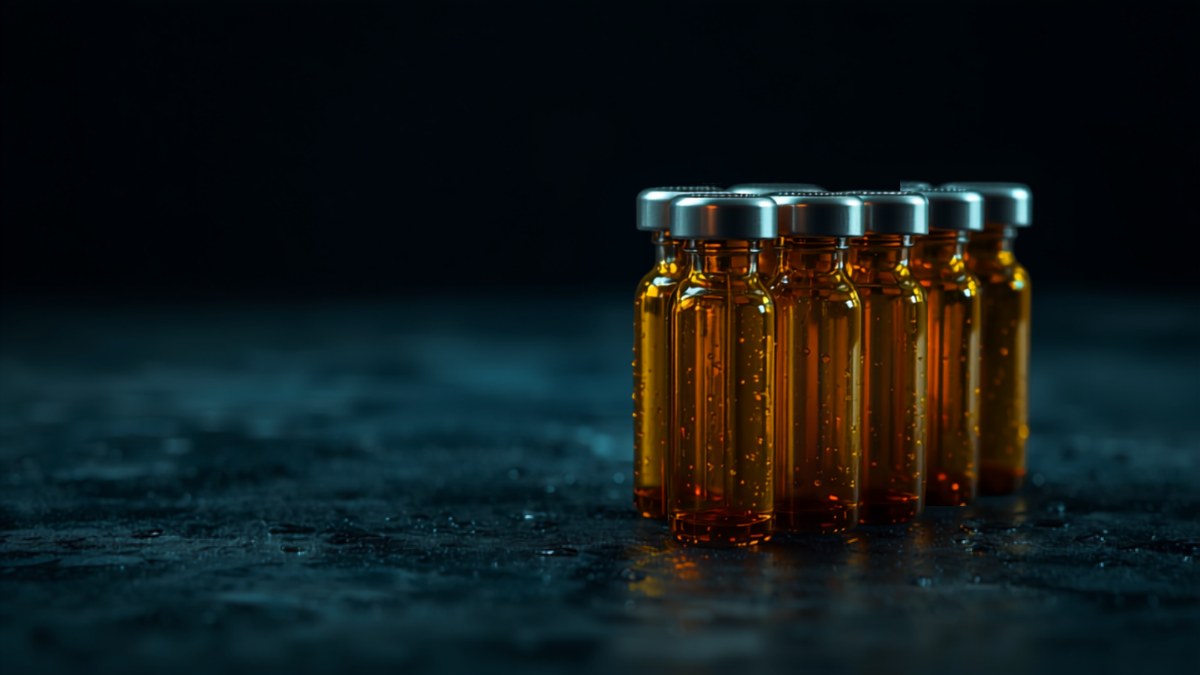
Reconstitution Research Peptides: Laboratory Best Practices for Lyophilised Material
Reconstitution of lyophilised peptide research material is a foundational laboratory procedure that affects downstream experiment integrity, data reproducibility, and material stability. Whether you are setting up a new research protocol or validating supplier materials in your facility, understanding the mechanics of reconstitution—including solvent selection, sterile technique, storage conditions post-reconstitution, and documentation—is essential. This guide walks through the practical considerations for handling lyophilised peptide research compounds and outlines what to evaluate when working with a peptide supplier.
What Is Lyophilisation and Why Is It Used for Research Peptides?
Lyophilisation (freeze-drying) is a dehydration process that removes water from a peptide solution under vacuum, leaving behind solid material. For research-grade peptides, lyophilisation offers several advantages: it extends shelf life by reducing moisture-dependent degradation, simplifies transportation and storage in a dry state, and allows for precise quantification and portioning of material into individual vials.
When you receive a lyophilised peptide from a research compound supplier, the vial typically contains a white to off-white powder or cake. The original concentration and mass of peptide in that vial should be documented on the vial label or accompanying paperwork. This information is your starting point for reconstitution calculations. However, you should treat the supplied information as a baseline and design your own validation procedures before relying on it in critical experiments.
Pre-Reconstitution Checks and Chain of Custody
Before opening a vial, confirm that the packaging and label are intact and legible. Check for any visible damage, moisture ingress, or discoloration in the lyophilised cake. A vial that shows signs of moisture or structural collapse may have undergone uncontrolled storage conditions and should be flagged for investigation with the supplier.
Verify that the lot number, compound name, stated mass or concentration, and any expiry information match your purchase order and the supplier's documentation. If documentation is missing, incomplete, or inconsistent, do not proceed—contact the supplier to obtain clear, traceable records before use.
Important note on analytical documentation: We hold no analytical testing documentation for any supplied material. No third-party testing (such as HPLC, mass spectrometry, or certificates of analysis) is performed or provided. All material should be treated as uncharacterised and requires independent validation by your laboratory before critical use. The absence of analytical documentation is a standard feature of research compound supply and should factor into your experimental design and risk assessment.
Selecting Appropriate Reconstitution Solvents
The choice of reconstitution solvent is critical and must be matched to the peptide's chemical properties and your experimental endpoint.
Water (sterile, nuclease-free, pyrogen-free): Suitable for many hydrophilic peptides. Use water that meets or exceeds the purity standards of your laboratory's molecular biology or cell culture protocols. If the peptide shows poor solubility in water, it may precipitate on reconstitution.
Buffered solutions (PBS, Tris, acetate buffers): Buffering maintains pH stability during storage and can improve solubility for some peptides. Buffer strength, pH, and osmolarity should match your downstream application. For long-term storage, a buffer with appropriate preservatives (e.g., 0.1% sodium azide or benzyl alcohol) may reduce microbial contamination, though this depends on your experimental constraints.
Organic or mixed solvents (DMSO, ethanol, acetic acid): Some peptides dissolve poorly in aqueous solutions and require organic solvents or mixed aqueous-organic systems. DMSO, for example, is a common choice for hydrophobic peptides but introduces its own handling requirements (chemical resistance of plastics, potential osmotic effects in cell work). Always verify that the solvent choice is compatible with your subsequent analytical methods and experimental design.
Solvent selection: Choose solvents appropriate to your analytical work and downstream applications. Consult the primary literature for your specific peptide to determine solvent compatibility and any known compatibility issues with common assay platforms.
Step-by-Step Reconstitution Procedure
Calculate the Target Concentration
Determine the final concentration you need and the volume you plan to make. If the vial label states a mass, use the peptide's molecular weight to calculate molarity. Work through the calculation on paper and have it reviewed by a colleague; errors at this stage propagate through all downstream work.
Prepare Your Workspace
Perform reconstitution in a clean, designated area. If your work requires sterile conditions (e.g., for certain cell-based assays), use a laminar flow hood and aseptic technique. For analytical or biochemical work, a clean bench may be sufficient, but minimize dust and contamination risk.
Reconstitution Steps
1. Remove the vial from storage and allow it to reach room temperature if it was stored at 4 °C or below. Rapid temperature changes can introduce moisture into the vial.
2. Inspect the lyophilised material visually before opening.
3. Add the appropriate volume of your chosen solvent. Many researchers add the solvent slowly and allow the material to hydrate for 10–30 minutes before mixing, rather than vigorous immediate agitation, to reduce foaming and air incorporation.
4. Vortex or pipette mix gently until the material is fully dissolved. Check for particulates or cloudiness; complete dissolution may take several minutes for some peptides.
5. Aliquot as appropriate for your storage and usage plan (see below).
Documentation During Reconstitution
Record the date, time, lot number, initial mass or concentration stated by the supplier, solvent type and lot, final volume, final calculated concentration, your name, and any observations (e.g., 'dissolved in 20 min', 'slight cloudiness observed'). This record is essential for troubleshooting later and for institutional traceability.
Storage and Stability Post-Reconstitution
Reconstituted peptides are generally less stable than lyophilised material and may degrade over weeks to months, depending on the peptide, solvent, and storage conditions.
Short-term storage (days to 1 week): 4 °C in a sealed vial is standard. Many peptides tolerate brief room-temperature storage, but cool conditions are preferable.
Medium- to long-term storage (weeks to months): −20 °C or −80 °C are typical. Use sterile, sealed microtubes or vials to minimize contamination and evaporation. Label each tube with the peptide name, concentration, lot number, reconstitution date, and expiry date (if known).
Freeze-thaw cycles: Each freeze-thaw cycle can degrade peptides. If you need aliquots for multiple experiments, divide the reconstituted material into small, single-use portions to avoid repeated freeze-thaw damage.
Preservatives: If your reconstituted peptide will be stored for extended periods, consult the literature for your specific peptide. Some researchers add 0.1% sodium azide or 0.02% sodium benzoate to inhibit microbial growth, but verify that these additives are compatible with your downstream assays.
What to Evaluate in a Supplier's Documentation and Processes
When selecting a research peptide supplier for reconstitution research peptides, consider the following:
1. Clarity of labelling: All vials should carry lot numbers, compound identifiers, and any stated mass or concentration. Missing or ambiguous labelling is a red flag.
2. Consistency of delivery information: The supplier should clearly state the typical delivery window. For orders to Canadian laboratories, a standard window is 10–15 days. Avoid suppliers making vague or variable shipping promises.
3. Honesty about testing: A trustworthy supplier will state plainly whether analytical testing is performed. If testing is not provided, the supplier should say so directly, allowing you to plan your own validation work within your laboratory.
4. Traceability: Ask whether lot numbers are unique and traceable, and whether the supplier maintains stable records of lot information and conditions.
5. Research-use-only messaging: The supplier should make clear that all materials are for laboratory research only and should avoid any health, therapeutic, or veterinary claims.
Research Note
This article summarizes general laboratory practice for handling lyophilised peptide research material. It is not medical, therapeutic, or veterinary advice. Always consult primary literature, your institution's safety protocols, and the supplier's specific guidance for your compound. Perform your own validation experiments to verify material stability and handling characteristics before critical use.
Disclaimer: All materials discussed in this article are for laboratory research use only. No claims are made regarding efficacy, purity, safety, or suitability for any application outside of controlled research environments. We hold no analytical documentation; all material should be treated as uncharacterised until independently validated by your laboratory. Always follow your institution's biosafety and chemical safety guidelines. This content is educational and does not constitute product endorsement or medical advice.