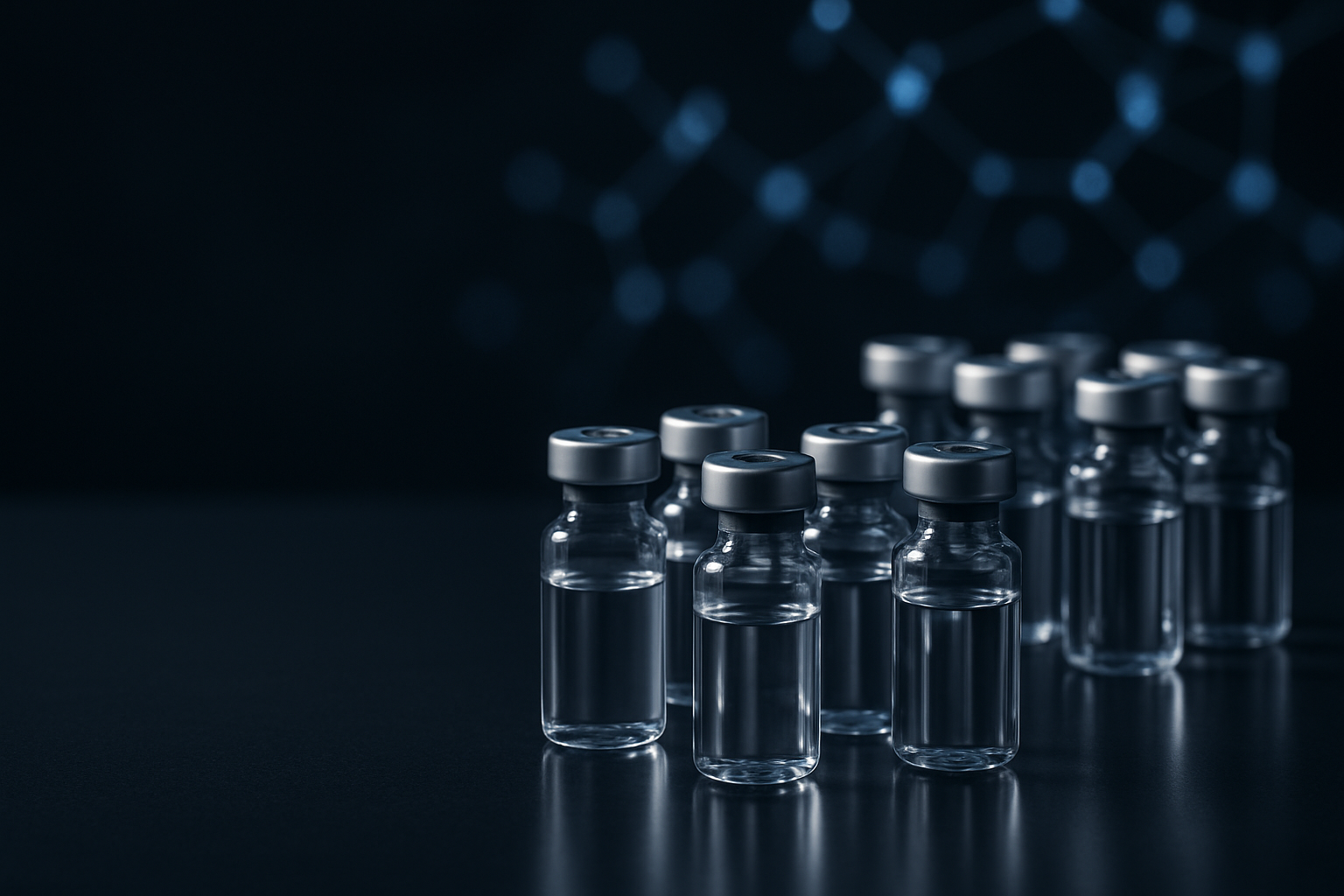
Reconstitution of Research Peptides: Laboratory Best Practices and Supplier Evaluation
Reconstitution of lyophilized research peptides is a critical procedural step that directly affects downstream assay validity and reproducibility. Improper reconstitution can introduce variance, compromise material integrity, and invalidate experimental results. This guide covers practical reconstitution methodology, what to verify before opening a vial, and how to evaluate supplier practices that support safe and accurate preparation.
Understanding Lyophilization and Why Reconstitution Matters
Research peptides are typically supplied in lyophilized (freeze-dried) form because this state minimizes degradation during storage and shipping. Lyophilization removes water while preserving peptide structure, provided the material has been handled correctly through the freeze-dry cycle and stored under appropriate conditions.
When you receive a lyophilized peptide, reconstitution—the process of rehydrating and dissolving the powder—reintroduces the peptide into solution for use in assays, cell culture, binding studies, or other research applications. The quality of reconstitution depends on three factors: (1) the initial handling and storage of the lyophilized material, (2) the choice and preparation of reconstitution solvent, and (3) adherence to gentle, validated mixing protocols.
Reconstitution is not merely adding water. It requires attention to pH, osmolarity, sterility (if applicable), and mechanical handling to avoid foam formation, oxidation, or peptide aggregation. Laboratories that treat reconstitution as a rigorous step—rather than a casual mixing task—report better reproducibility and more defensible assay results.
Material Documentation and Your Testing Responsibility
Before reconstitution research peptides, you should understand what documentation exists and what does not. We hold no analytical documentation for our products. The material should be treated as uncharacterised, and you are responsible for verifying suitability for your application through your own testing or consultation of published literature on the peptide sequence.
What testing typically entails:
These tests generate detailed reports of material properties. Other assays measure moisture content, identity, and chemical stability markers.
Our position:
We do not provide certificates of analysis, analytical testing, third-party verification, or any characterisation data. No purity figures, test results, batch-specific reports, or measurement documentation are issued or available. If analytical confirmation is essential for your research, you will need to arrange independent testing through a qualified analytical laboratory before or after receipt of material.
What you can do:
- Request technical literature or sequence information from the supplier to inform your experimental design.
- Conduct your own analytical testing on received material if regulatory, publication, or reproducibility standards require it.
- Consult published research on the peptide or peptide class to understand likely solubility, stability, and handling characteristics.
- Document your own observations (clarity, color, solubility behavior) during reconstitution for your laboratory records.
This approach ensures that you maintain full responsibility for material assessment and are not relying on claims or documentation that do not exist.
Pre-Reconstitution Inspection and Cold-Chain Verification
Before opening a vial, inspect the external packaging and the vial itself:
- Seal integrity: The vial cap and flip-off seal should be unbroken. A compromised seal may indicate exposure to moisture or contaminants during shipment.
- Visual inspection: Look for discoloration, crystalline deposits outside the lyophilized cake, or condensation inside the vial. Some peptides are colorless or off-white; others (e.g., those containing aromatic residues or chromophores) may have a light color. Unexpected coloration or caking can signal oxidation, hydrolysis, or improper storage.
- Documentation of receipt timing: Confirm that the package arrived within the expected delivery window (10–15 days). If your order arrived outside this window or shows signs of temperature excursion, contact the supplier.
Cold-chain continuity is important for sensitive peptides. Peptides that have been thawed and refrozen may show reduced solubility, increased aggregation, or chemical modification. If you have concerns about storage conditions during transit, document them and consider performing your own assessment of the material before committing it to critical experiments.
Solvent Selection and Reconstitution Protocol
The choice of reconstitution solvent is peptide-specific and should be guided by published literature on the peptide sequence or by consultation with the supplier regarding solubility characteristics.
Common reconstitution solvents:
- Ultrapure water (ddH₂O or 18 MΩ resistivity): Suitable for many peptides but may cause osmotic stress in cell-based assays if concentrated. Risk of peptide aggregation in low-salt environments.
- Phosphate-buffered saline (PBS) or Tris buffer: Maintains pH and osmolarity. Reduces aggregation and is compatible with most cell and enzyme assays.
- Acetic acid solutions (0.1%): Used for highly hydrophobic or cationic peptides that may aggregate in water alone. Acetic acid is volatile and can be partially removed by drying under vacuum if necessary.
- DMSO (dimethyl sulfoxide): Occasionally used for poorly soluble peptides, though it can affect downstream assays if not removed or diluted.
Reconstitution steps:
1. Prepare solvent in advance: Use sterile, pyrogen-free water or buffer if required for your application. Ensure the solvent is at room temperature or slightly cool (not hot).
2. Calculate target concentration: Use the peptide mass stated on the vial label and the desired final volume to estimate the required solvent volume. Account for the residual water in the lyophilized cake by consulting literature on peptide hydration or by performing a test dissolution.
3. Add solvent gradually: Do not add all solvent at once. Slowly pipette a small aliquot (e.g., 10–20% of total volume) into the vial and allow the lyophilized material to hydrate for 5–10 minutes. Then gradually add the remainder while gently swirling (do not vortex vigorously, which can trap air and promote aggregation).
4. Gentle mixing: Use a vortex at low speed or swirl by hand for 30–60 seconds. If the peptide does not dissolve readily, allow the vial to sit at room temperature or 4 °C for up to 30 minutes. Some hydrophobic peptides require extended hydration time.
5. Verify clarity: Once fully reconstituted, the solution should be clear or slightly turbid (acceptable for some peptides). Persistent cloudiness may indicate aggregation or insolubility; document this and consider whether further dilution or solvent adjustment is needed.
Never force a peptide into solution by heating, excessive vortexing, or sonication without literature evidence that the peptide tolerates such treatment.
Storage of Reconstituted Solutions and Secondary Aliquoting
Reconstituted peptide solutions are less stable than lyophilized material. Oxidation, proteolysis, and aggregation proceed more rapidly in solution.
Storage best practices:
- Temperature: Store reconstituted peptides at −20 °C or −80 °C, depending on the intended use period. −80 °C is preferred for long-term storage (weeks to months).
- Container: Use sterile, pyrogen-free microtubes or vials with inert caps. Glass is preferable for hydrophobic peptides, which may adhere to or leach from plastic.
- Headspace and atmosphere: Minimize air exposure. If sterility is not required, a small volume of inert gas (nitrogen or argon) can be layered above the solution. If using sterile solutions, aseptic technique is mandatory.
- Aliquoting: Divide stock solutions into single-use or few-use aliquots immediately after reconstitution, rather than repeatedly opening and closing a single vial. This practice reduces oxidative exposure and contamination risk.
- Documentation: Label each aliquot with the peptide name, lot number, reconstitution date, solvent, concentration, and storage temperature. Maintain records linking your material to the original order for full traceability.
Selecting a Supplier: What to Ask
When sourcing research peptides, ask the supplier directly about their practices:
- What documentation do you provide? Clarify whether the supplier offers technical information or specification sheets, and understand that analytical testing and certification are not provided.
- What is your storage protocol? Ask about conditions during manufacture, storage, and transit. A supplier should be able to describe their cold-chain practices.
- What is your delivery timeframe? Confirm the expected delivery window. Our orders ship 10–15 days from order placement.
- Can you provide technical literature? Request information on solubility, known degradation pathways, or handling notes for the specific peptide you are ordering.
- What is your process if I have concerns about material quality? Understand the supplier's policy on replacement, refund, or dispute resolution.
Suppliers who are transparent about what they do and do not provide, and who offer reasonable delivery timelines and responsive communication, are generally more reliable partners for research work.
Conclusion: Reconstitution as a Quality-Control Checkpoint
Reconstitution of research peptides is not an afterthought—it is a critical checkpoint in the research workflow. By verifying vial integrity before opening, selecting appropriate solvents based on published guidance, and employing gentle reconstitution protocols, you maximize the likelihood that your prepared material will perform consistently and reproducibly in downstream assays.
Choosing a supplier that communicates transparently about documentation, delivery, and cold-chain handling is the foundation. From there, careful bench practice and, where necessary, your own analytical verification ensure that material received is suitable for your research goals.
Research Use Only Disclaimer: This article is intended for laboratory and research professionals. The peptides discussed are for research use only and are not intended for human, animal, veterinary, or therapeutic use. All work with research peptides should comply with institutional biosafety and ethics guidelines. Always consult relevant safety data sheets before handling. We hold no analytical documentation for our products; material should be treated as uncharacterised. Orders ship directly from our manufacturing partner within 10–15 days.