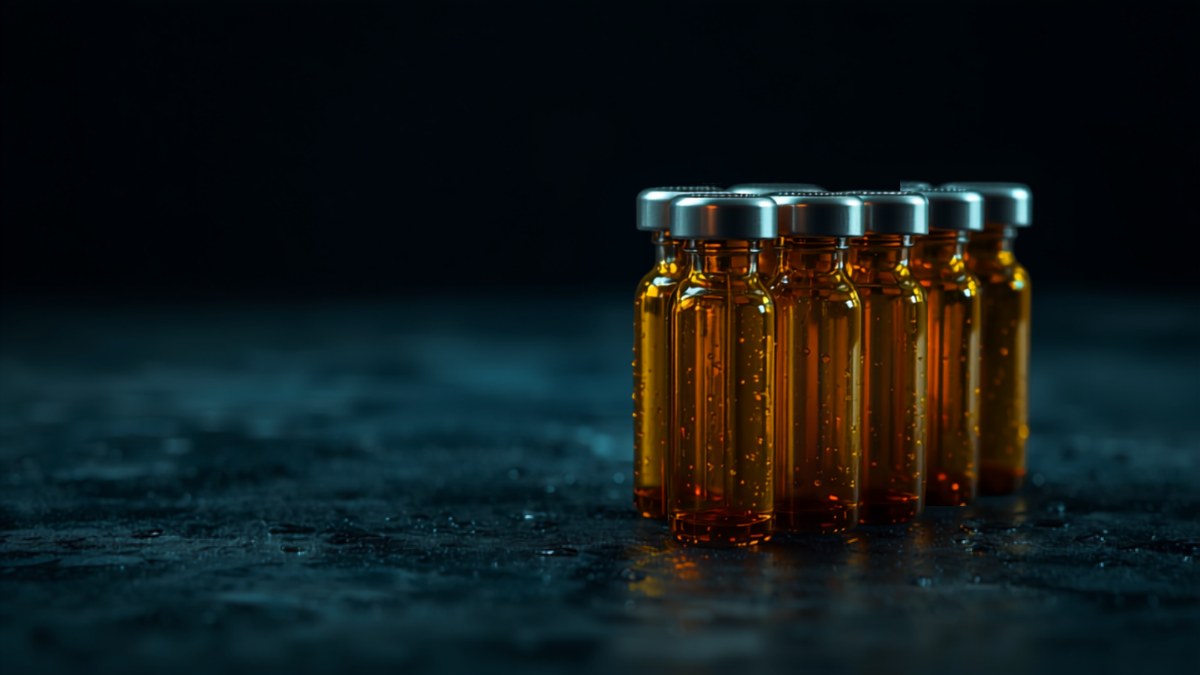
Compounding Grade Research Peptides: Evaluation, Handling, and Storage Standards for Laboratory Work
When sourcing compounding grade research peptides for laboratory study, researchers face a critical decision: understanding what "compounding grade" means, how to work with supplier materials, and what handling protocols protect experimental integrity. This post focuses on practical bench knowledge—how to evaluate peptide orders, manage reconstitution, maintain cold chain, and document custody—so your research pipeline remains reliable from receipt through analysis.
What "Compounding Grade" Means in the Research Peptide Context
"Compounding grade" refers to materials synthesized for use in controlled laboratory environments, without claims of pharmaceutical purity or regulatory certification. Unlike materials marketed with undefined quality assurances, compounding grade peptides are supplied for research use only and should be treated as uncharacterized materials until your own laboratory analysis confirms their properties and suitability for your work.
The term does not imply certification of any kind, nor does it guarantee testing by the supplier, batch-specific analytical reports, or purity thresholds. Instead, it signals that the material is intended for bench-scale experimentation, formulation development, or academic study. Researchers must understand that upon receipt, these peptides carry no analytical documentation from the supplier—they are raw research compounds that should be treated as unanalyzed until evaluated through your own laboratory protocols.
This distinction matters because it shifts responsibility to the receiving laboratory. You are not purchasing a characterized pharmaceutical input; you are acquiring a research material whose properties your laboratory will need to assess before incorporation into downstream applications.
Evaluating Your Supplier: What Questions to Ask Before Ordering
Before placing an order for compounding grade research peptides, establish clear expectations about what the supplier can and cannot provide.
Documentation and transparency. Ask whether the supplier holds analytical data for the material. The direct answer from suppliers in this space is typically no—they do not issue certificates of analysis, batch-specific analytical reports, or any analytical verification. This is standard practice in the research-peptide industry. Do not assume that testing has occurred unless the supplier explicitly offers documentation in writing. Treat the material as unanalyzed and plan your own characterization work accordingly. Do not rely on unsubstantiated claims about material quality.
These are standard laboratory techniques in peptide chemistry. However, the supplier you are purchasing from does not perform or provide such analysis. That responsibility and capability lie entirely with your laboratory if your work requires it.
Manufacturing and supply chain. Legitimate suppliers will tell you that orders ship directly from their manufacturing partner. Supply-chain transparency varies, but your supplier should be straightforward about realistic logistics and delivery timelines. Ask your supplier directly: "How long is the typical delivery window?" and "What is included in the packaging to maintain stability during transport?" These are practical questions that reflect genuine laboratory logistics.
Delivery timeline. Verify the realistic delivery window. Compounding grade research peptides typically ship within 10–15 days of order. Plan your cold-chain receiving protocol around this timeframe.
Material form and initial state. Confirm that your peptide arrives as a lyophilized (freeze-dried) powder. Lyophilization is the standard form for long-term stability and ease of transport. Ask about the vial size, approximate fill volume, and any inert gas or desiccant included in packaging. This information is essential for your reconstitution plan.
Receiving, Chain of Custody, and Initial Inspection
When your compounding grade research peptide arrives, treat it as an unverified material and document every step.
Upon arrival, immediately inspect the package. Note the external condition: Is the box intact? Are cold packs present and still frozen or slushy? Record the ambient temperature at receipt if possible. Open the outer packaging and photograph the inner container (vial, tube, or ampoule) before moving it. This creates a visual record of condition at receipt—important if stability or degradation becomes a question later.
Check labeling and lot information. The vial should display a lot number or batch identifier. Record this in your chain-of-custody log, along with the date received, your name, the supplier name, the peptide name, and the stated mass or volume. Even without analytical data, the lot number links your material to a specific synthesis run; preserve this link throughout storage and use.
Verify material form. Lyophilized peptides appear as a white, off-white, or pale yellow powder or cake at the bottom of the vial. If the vial appears wet, cloudy, or contains visible crystalline material that seems out of place, photograph it and contact your supplier—the material may have been exposed to moisture or temperature excursion during transport.
Store immediately at −20 °C or colder. Do not leave the peptide at room temperature. Transfer the vial to a dedicated peptide freezer (not a general lab freezer used for biological samples, to minimize repeated freeze–thaw cycles from other users). Label the freezer location and update your inventory system with the storage coordinates.
Reconstitution Practice and Handling Protocol
Reconstitution is where many researchers encounter preventable problems. Since compounding grade peptides arrive uncharacterized, your reconstitution and storage conditions directly affect whether the material remains suitable for downstream work.
Choose your solvent deliberately. Most lyophilized peptides dissolve in sterile, pH-buffered solutions: phosphate-buffered saline (PBS), acetic acid solutions, or ultrapure water. The choice depends on your downstream application and the peptide's chemical properties. Consult the primary literature on the peptide sequence or contact a peptide chemistry resource for guidance. Document your solvent choice and the rationale in your lab notebook.
Use sterile technique. Even though these are research materials, contamination will degrade your data. Use sterile, pyrogen-free syringes and needles to withdraw solvent. If you reconstitute in a vial, use aseptic technique and 70% ethanol to wipe the rubber septum before puncture.
Reconstitute at an appropriate concentration. The starting mass or volume on your vial's label guides this calculation. If you received 1 mg of peptide and plan to use 1 µM solutions, calculate the volume of solvent needed based on the peptide's molecular weight. Write this calculation in your notebook and verify it before proceeding.
Allow time for complete dissolution. Peptides often dissolve slowly, especially if they are hydrophobic or form aggregates. Mix gently at room temperature for 10–30 minutes, then store. Do not assume a peptide is dissolved immediately after adding solvent.
Document the reconstitution step. Record the date, solvent, solvent volume, vial lot number, and your initials. This creates a linked history: original material → reconstitution conditions → storage location → experimental use.
Storage, Stability, and Cold-Chain Management
Lyophilized peptides are stable at −20 °C for extended periods, but reconstituted solutions degrade more rapidly. Your storage strategy must account for both forms.
Lyophilized storage. Keep the original vial sealed at −20 °C or colder (−80 °C is acceptable and may extend stability further). Minimize air exposure by storing in a desiccator or nitrogen-flushed container if the vial is frequently accessed. Every time you open the vial to withdraw material, you expose the remaining powder to ambient humidity; limit these events. If you plan to use the peptide over weeks or months, consider aliquoting: reconstitute a portion in sterile tubes for short-term use (stored at 4 °C for 1–2 weeks, or −20 °C for longer) and keep the original vial sealed and frozen.
Reconstituted solution storage. Once dissolved, peptides are more susceptible to oxidation, hydrolysis, and microbial growth. Store reconstituted aliquots at 4 °C if you plan to use them within days, or at −20 °C if storage exceeds one week. For critical experiments, prepare fresh reconstitutions from the original lyophilized material rather than thawing old aliquots. Avoid repeated freeze–thaw cycles, which can precipitate or aggregate peptides.
Cold-chain documentation. Record freezer temperatures daily or weekly, depending on your institutional standard operating procedure. If a freezer malfunction occurs and the peptide warms above −10 °C for more than a few hours, discard the material—you cannot reliably know whether degradation occurred.
Material assessment before critical use. Because you receive uncharacterized material, you have no baseline to prove that your stored peptide remains unchanged. If your research depends on the peptide's integrity, consider running a simple check relevant to your downstream application to confirm the material's usability before deploying it in critical experiments.
Labeling, Documentation, and Regulatory Context
Proper labeling and record-keeping ensure that your research is reproducible and defensible.
Vial labeling. The supplier's label should include the peptide name (or sequence), lot number, mass or volume, and date of synthesis (if provided). Keep this label intact. If you create secondary aliquots or reconstituted solutions, label each with the parent lot number, the date of preparation, and the solvent or concentration. Use waterproof labels to withstand freezer conditions.
Laboratory notebook entries. For each peptide you receive and use, record:
- Supplier name and order date
- Lot number and receipt date
- Initial visual inspection notes
- Storage location and temperature
- Reconstitution date, solvent, concentration, and volume
- Any anomalies observed during storage or handling
- Date(s) of use in experiments
This record serves as your chain of custody and is critical if questions arise about data integrity or material provenance.
Regulatory context. Compounding grade research peptides are supplied for laboratory research use only. They are not approved for human, animal, or diagnostic use. Your use of these materials in any application outside a controlled research environment violates the supplier's terms and applicable law. Maintain clear separation between research inventory and any clinical or commercial work.
Conclusion: Building a Reliable Peptide Research Workflow
Sourcing compounding grade research peptides requires realistic expectations: these are uncharacterized materials supplied for bench-scale study. Your responsibility begins at receipt. By asking your supplier the right questions, implementing careful chain-of-custody documentation, following sterile reconstitution practice, and managing cold-chain storage diligently, you create a foundation for reproducible research.
Evaluate suppliers based on transparency and honesty, not marketing claims. Understand that you will not receive analytical certificates or purity guarantees. Plan your own characterization work if your research depends on material properties. Document everything, from delivery through storage and use. When you treat compounding grade peptides as the research materials they are—not as pharmaceutical inputs—you avoid surprises and build confidence in your results.
Disclaimer: This post is for informational purposes and supports laboratory practice only. It is not medical advice. Compounding grade research peptides are supplied for laboratory research use only and are not approved for human consumption, veterinary use, or clinical application. Always consult primary literature, your institutional review board, and your supplier's terms of service before beginning any research project.