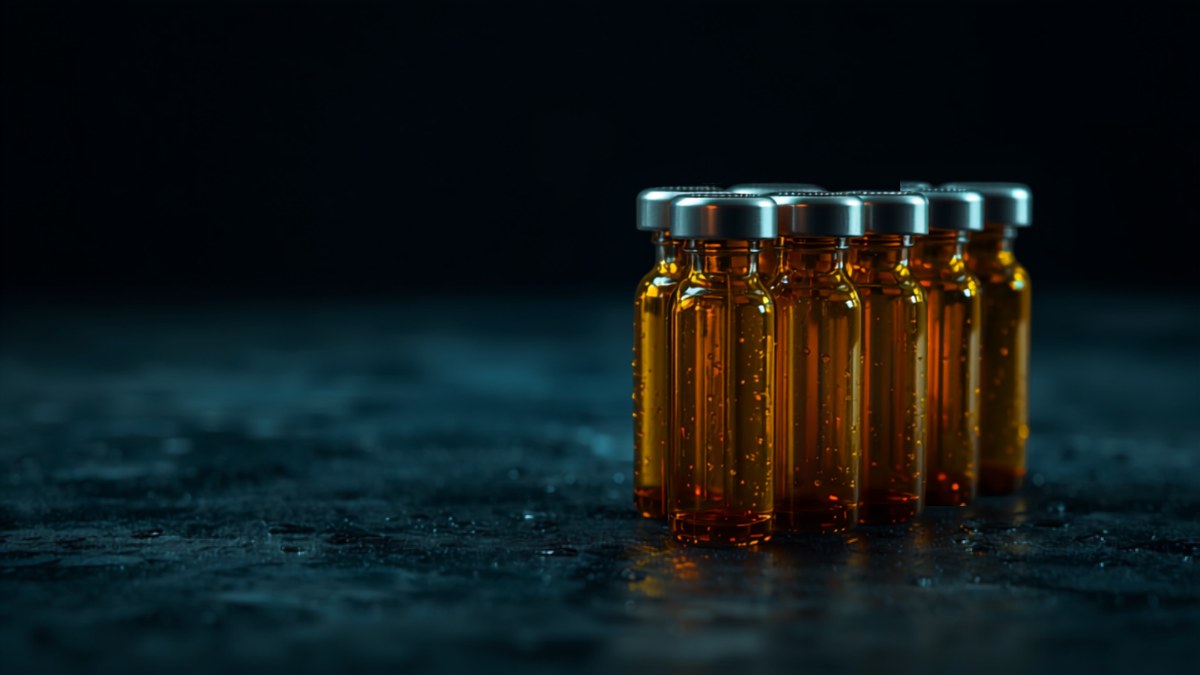
Reconstitution Research Peptides: Laboratory Handling and Best Practice
Reconstitution of lyophilised peptide material is a foundational laboratory procedure that demands precision, attention to solvent chemistry, and rigorous documentation. Whether you are preparing research peptides for in vitro assay work, cell-based systems, or animal model protocols, the reconstitution step directly influences the integrity and repeatability of your experiments. This guide covers the practical considerations—solvent selection, sterility, stability monitoring, and chain of custody—that distinguish competent handling from preventable errors.
Understanding Lyophilisation and Why Reconstitution Matters
Research peptides are typically supplied as lyophilised (freeze-dried) powder. Lyophilisation removes water under controlled conditions, leaving a dry, stable solid that minimizes oxidation and hydrolysis during storage and shipping. When you receive a lyophilised peptide, the material is inactive as a powder; reconstitution dissolves it into a usable solution.
The reconstitution process is not trivial. Peptides are sensitive molecules. Mechanical stress, inappropriate pH, contaminants, and temperature fluctuations during or after reconstitution can alter the peptide's structure. Poor reconstitution technique—or use of inappropriate solvents—can lead to aggregation, precipitation, or chemical degradation that compromises your downstream experiments. Understanding why your supplier ships lyophilised material and how to reconstitute it correctly is essential for reproducible research.
Solvent Selection and Osmolarity
The choice of reconstitution solvent is non-negotiable. Water alone is often insufficient. Research-grade peptides are typically reconstituted in:
- Phosphate-buffered saline (PBS) — maintains physiological pH and osmolarity; ideal for cell culture and in vivo work.
- Sterile, pyrogen-free water — acceptable for many applications but offers no buffering capacity.
- Dimethyl sulfoxide (DMSO) — used when aqueous solubility is poor; requires careful handling and documentation.
- Acetic acid or formic acid solutions — employed when peptide hydrophobicity demands organic solubility; must be documented and controlled.
Your supplier's product sheet—if complete—should recommend a solvent and a target pH. You should always consult the product documentation before choosing a solvent. Mismatched solvent chemistry can cause immediate precipitation or gradual degradation.
Osmolarity and Stability
For cell-based and in vivo applications, the osmolarity of your reconstituted solution matters. A solution that is too hypotonic or hypertonic can alter cell behaviour independently of the peptide's properties. When reconstituting, calculate the final osmolarity if your downstream use demands it. Document your chosen solvent, volume, and resulting concentration so that future experiments can be replicated.
Practical Reconstitution Procedure and Chain of Custody
Step-by-Step Handling
1. Inspect the vial. Before opening, record the vial ID, lot number, and receipt date. Examine the lyophilised cake for discolouration or visible moisture. A cake that appears wet or caked may indicate improper storage.
2. Prepare your workspace. Use a biosafety cabinet or laminar flow hood if sterility is required for downstream work. Clean surfaces with 70% ethanol and allow to air-dry.
3. Calculate volumes precisely. If your supplier specifies a reconstitution concentration (e.g., 1 mg/mL), calculate the total solvent volume needed. Record this calculation in your lab notebook or electronic lab record (ELR).
4. Add solvent slowly. Do not inject solvent forcefully into the vial; use gentle pipetting or slow addition. Turbulent reconstitution can trap air, causing peptide aggregation or foam.
5. Incubate if needed. Some peptides require gentle agitation or brief incubation at room temperature or 4 °C to fully dissolve. Check the product sheet; if no guidance is given, allow 15–30 minutes gentle mixing at 4 °C.
6. Assess clarity. A clear, colourless to pale yellow solution indicates successful reconstitution. Cloudiness, precipitation, or unusual colour suggests a problem—stop, document observations, and contact your supplier or literature before proceeding.
7. Aliquot for stability. If you are not using the entire reconstituted solution immediately, divide it into small, single-use aliquots in sterile vials. This reduces the number of freeze–thaw cycles any one aliquot experiences.
8. Label completely. Each aliquot must be labelled with: peptide name, lot number, reconstitution date, reconstitution solvent, concentration, your initials, and expiry date (if known). Use waterproof ink or printed labels.
Documentation
Every reconstitution event should be recorded:
- Date and time
- Operator name and initials
- Vial/lot number
- Mass or vial contents (if known)
- Solvent used and volume added
- Final intended concentration
- Any deviations or observations
- Storage location and conditions
This creates an auditable chain of custody. Should an experiment fail or be questioned later, complete documentation allows you to trace the history of the material.
Storage and Stability Considerations
Lyophilised peptides remain stable at room temperature for extended periods if kept dry and protected from light. However, once reconstituted, peptide solutions are more vulnerable to chemical changes.
Recommended Storage Protocols
- Short-term (days to 1 week): 2–8 °C (refrigerator).
- Medium-term (weeks to months): –20 °C (standard freezer) in small aliquots.
- Long-term (months to years): –80 °C (ultra-low freezer) or liquid nitrogen.
Freeze–thaw cycles may affect peptide material. Each time you thaw a frozen aliquot, chemical processes occur that may alter the peptide over repeated cycles. If you anticipate multiple uses, plan your aliquoting accordingly. One-use aliquots minimize this exposure.
Monitoring Material Condition
If your supplier does not provide stability data—and most suppliers of research-only material do not—treat the reconstituted peptide as uncharacterised. You may establish your own working observations through periodic monitoring (for example, visual inspection or absorbance at 280 nm for peptides with aromatic residues). Document your observations and any apparent changes over time.
Do not assume a reconstituted peptide remains unchanged indefinitely at –20 °C. Chemical changes may occur slowly but persistently. If you are working on a multi-month project, consider re-ordering fresh material or conducting your own assessments at key time points.
Handling Uncharacterised Material and Analytical Limitations
Most research peptide suppliers, including ours, do not provide batch-specific analytical documentation. We hold no certificates of analysis, no HPLC or mass-spectrometry testing data, and no characterisation records for individual batches or lots. This means the identity, purity, and exact composition of the material you receive have not been independently verified or documented by us.
What This Means for Your Laboratory
When you receive a lyophilised peptide without analytical documentation, treat the material as uncharacterised. This reflects the operational model of research-supply and does not indicate inferior quality. It does mean:
- You are responsible for assessing identity and purity if your protocol requires it. This typically involves acquiring your own analytical testing through independent laboratories.
- You should document your own testing if you undertake it, and file the results with your batch record.
- Shelf life and stability are your responsibility to establish, through storage studies or literature review of similar peptides.
If analytical data is essential for your research, ask your supplier directly whether they offer testing services or can recommend an independent analytical laboratory. A transparent supplier will state clearly what documentation they do and do not hold.
Choosing a Supplier and Setting Expectations
As a laboratory director or principal investigator, your choice of supplier should be guided by:
1. Transparency about what is and is not provided. Does the supplier offer analytical testing? If not, are they candid about it?
2. Clear product documentation. Is a reconstitution protocol, recommended solvent, and storage guidance provided?
3. Delivery timelines. Research peptides typically ship within 10–15 days of order. Confirm this window with your supplier before committing.
4. Order and delivery tracking. Can the supplier provide a purchase order number, tracking ID, and estimated arrival date?
5. Communication channel. Is technical support available if reconstitution fails or you have questions?
A supplier that answers these questions straightforwardly is likely to be reliable. One that makes claims about purity, testing, or analytical documentation without providing independently verifiable evidence should raise concern.
Key Takeaways
- Reconstitution is a deliberate procedure; plan it as carefully as any other lab step.
- Use the solvent recommended by your supplier; document your choice and reasoning.
- Aliquot reconstituted peptides into small portions to minimise repeated freeze–thaw exposure.
- Assume reconstituted material is uncharacterised unless you have conducted your own testing.
- Choose suppliers who are transparent about what documentation and analytical support they do and do not provide.
Disclaimer
This article is educational and intended for laboratory professionals working with research compounds. It does not constitute medical, therapeutic, diagnostic, or veterinary advice. All research peptides described in this content are for laboratory research use only. Individual research protocols must be reviewed by your institution's review board and must comply with all applicable regulations. Consult the primary literature and your supplier's product documentation before beginning work.